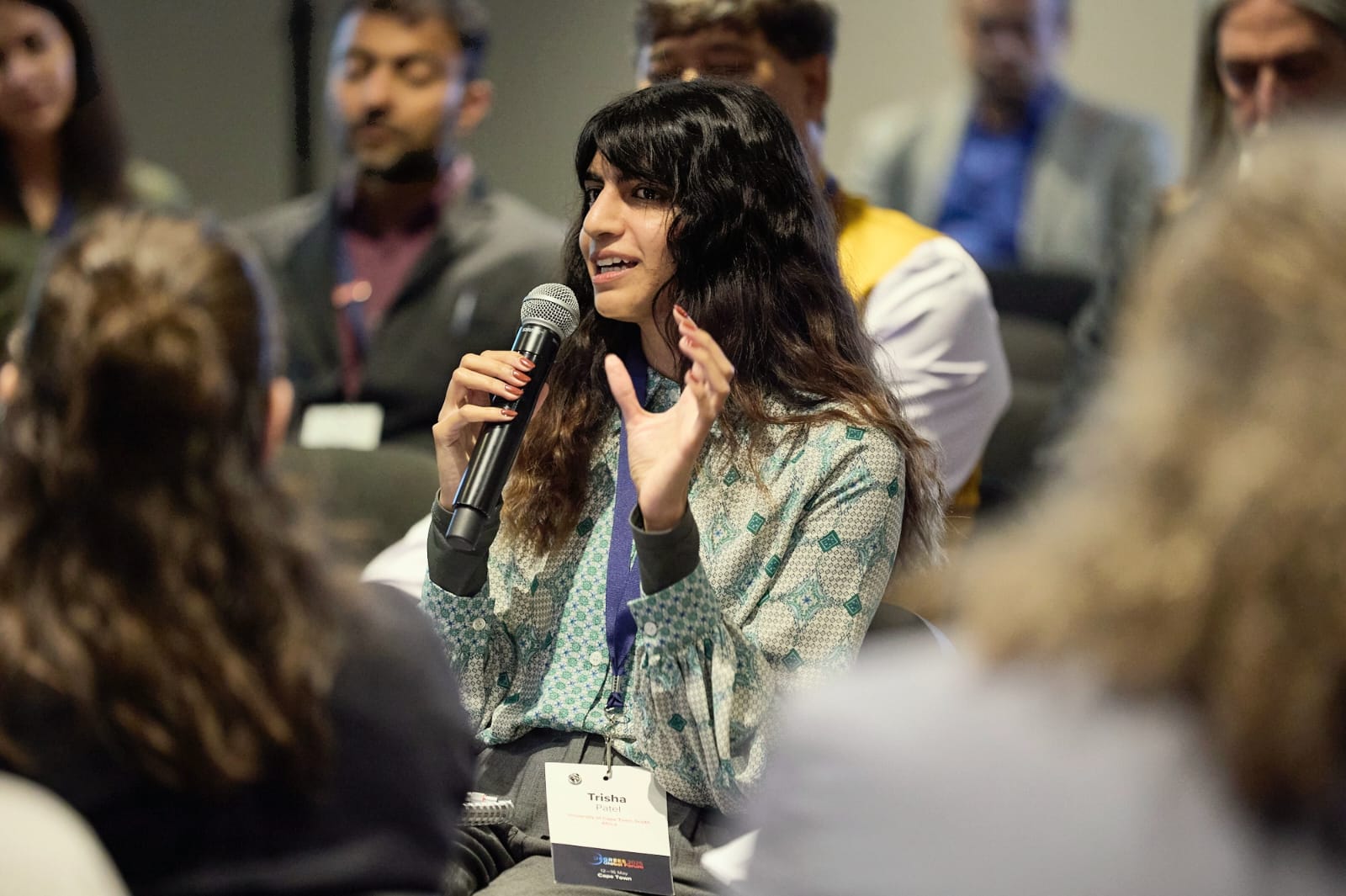
Trisha Patel on African-Led Climate Intervention Research
By Wonder & Co.
In this week’s feature, we connect with Trisha Patel, an ACIRH fellow and early-career researcher at the University of Cape Town’s African Climate and Development Initiative (ACDI). She holds an MSc specialising in Climate Change and Sustainable Development, also from the University of Cape Town.
Trisha’s ACDI research examines how solar radiation modification (SRM) could alter regional African climates, and consequently, climate-sensitive sectors such as agriculture, health, and energy. The innovative nature of SRM drew her to the field. She was struck by how little climate intervention research originated in the regions most likely to experience its effects, despite their distinct environmental, social and economic conditions. Though SRM may never be deployed, the possibility of its future consideration highlights a critical research gap Trisha aims to address.
Over time, Trisha grew increasingly interested in how modelled changes might translate across a regional scale, first for natural systems, then through the cascading effects across human systems. By focusing on the gap between model results and real-world consequences, Trisha keeps communities, not just science at the center of her work.
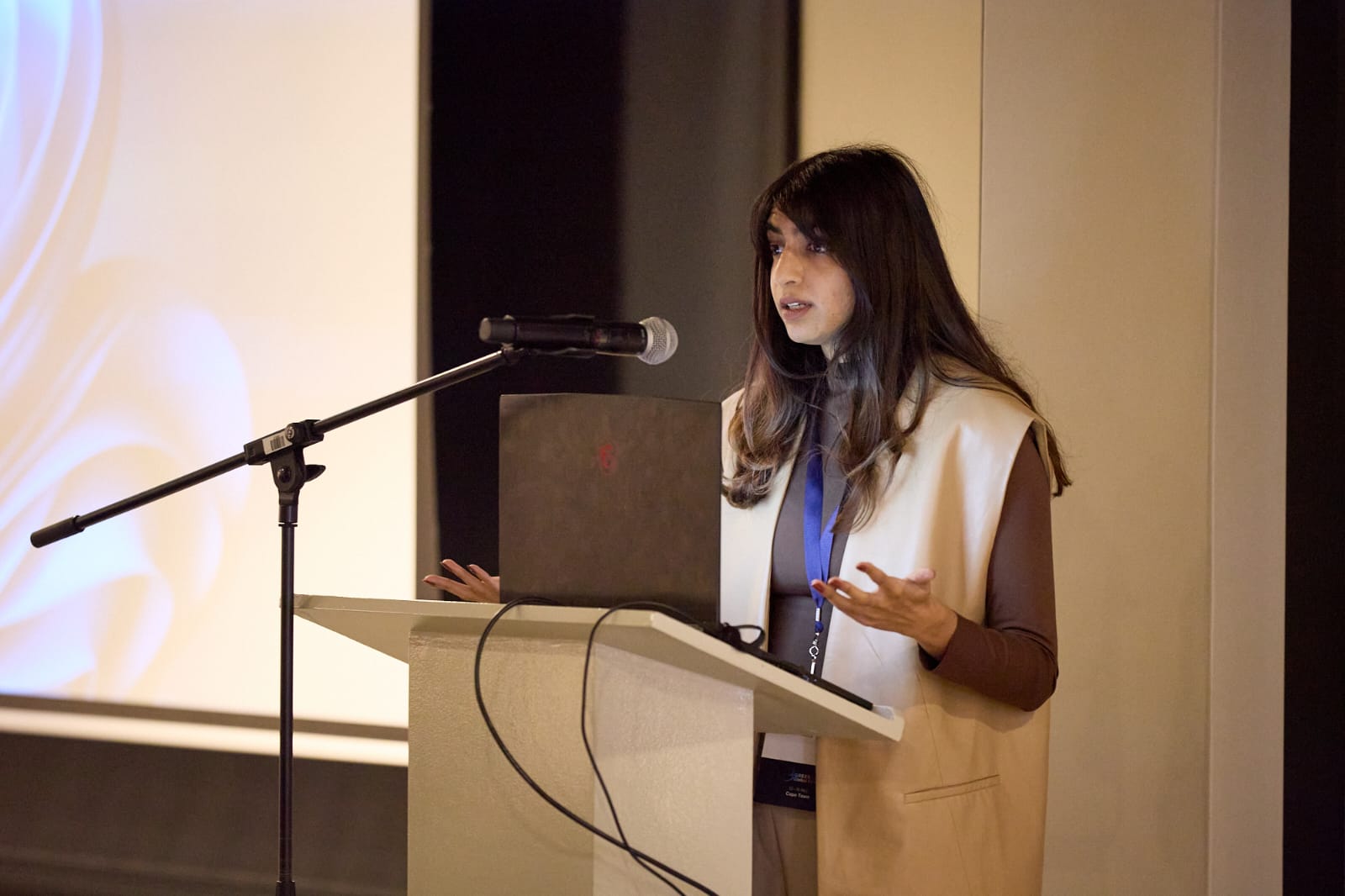
As a current research associate at the African Tech Futures Lab (ATFL), Trisha splits her focus between Africa’s carbon dioxide removal landscape and the Climate Intervention Futures Initiative (CIFI). To address the field’s ambiguous terminology, which hinders public understanding and effective governance, she co-led the development of a living taxonomy alongside Grace Tamble, Jessica Seddon, and Rose M. Mutiso. The framework maps 75 climate interventions based on human action, Earth system impacts, and overall consequences.
What excites Trisha most is the potential to link climate modelling to practical decisions, making complex science useful and relatable to people working across health, agriculture, energy, policy and civil society. Her work on terminology has also drawn her into questions of SRM governance. Across both areas, she hopes to build a research landscape in which African researchers and institutions help set the agenda rather than respond to priorities established elsewhere.
Trisha sees ACIRH’s global role as connecting Africa’s fragmented climate intervention research. By bringing together expertise in modelling, governance, ethics and public engagement, the Hub can help African researchers shape global debates from the outset. For Trisha, this means embracing disagreement and uncertainty rather than promoting a single position.
Could you tell us a bit about your current research?
My research has become a slightly unruly Venn diagram of climate science, human systems, governance and communication – and I seem to have unexpectedly found myself quite pleased to be here.
A large part of my work at the University of Cape Town’s African Climate and Development Initiative has focused on understanding how solar radiation modification (SRM) might affect regional climates in Africa, and what the physical changes could mean for climate-sensitive sectors such as agriculture, health, energy and tourism. Over time, I became especially interested in the space between the model result and the real-world consequence: how a projected change in temperature or rainfall might translate into contextually grounded implications for particular places, people and systems.
More recently, my work at the African Tech Futures Lab has broadened into the wider climate intervention (CI) landscape through the Climate Interventions Futures Initiative (CIFI), alongside research into Africa’s carbon dioxide removal landscape. This includes developing new ways of classifying climate interventions, examining the assumptions that shape the field, and thinking carefully about how different framings shape implications for research, governance, communication, and public decision-making.
Across these projects, the thread running through my work is a fairly simple question: how do we make climate intervention research more regionally relevant, understandable, accessible and, ultimately, more useful to the people who may one day be asked to make decisions about it?
Solar Radiation Modification (SRM) is a controversial area of climate science. What drew you to it, and why did it feel like the right place to focus your work?
I was probably drawn to SRM precisely because it did not feel like a particularly easy or comfortable space to enter.
My first encounter with SRM was during my postgraduate studies, when I researched how SRM might affect climate extremes in South Africa. The unconventional nature of the idea initially caught my attention, followed very quickly by the sheer scale of the unanswered questions surrounding it. At the time, much of the research focused on how SRM might affect broad global climate variables through modelling studies. As I engaged more deeply with the literature, I found myself increasingly interested in what those changes might mean at a regional scale – first (and importantly) for natural systems, and then through the cascading effects they could have across human systems.
I was also struck by how little research had been produced from many of the places likely to experience these changes under very different environmental, social and economic conditions. SRM may never be deployed, and there are strong reasons for caution. However, the possibility that it could one day be seriously considered, while large parts of the world are represented to a limited extent in the evidence used to evaluate it, seemed an important gap to work on.
Your work bridges the physical science of climate change with its implications for human health and disease. What helps you keep real communities (not just the science) at the centre of that work?
Analysing projected climatic changes is an essential starting point for understanding the possible risks and benefits of a future with CI compared with one without it. A next step, though, is to look closely at the character of the place being studied.
This includes considering existing vulnerabilities, livelihoods, infrastructure, public health systems and the many non-climatic factors that shape whether a physical change might be manageable, beneficial or harmful. A shift in temperature or rainfall does not affect everyone in the same way, and the model result alone cannot tell us how people are likely to experience it.
Engagement beyond academia is therefore very important to me. Conversations with civil society, policymakers and researchers working more closely with affected sectors often make visible assumptions or blind spots that might be overlooked in physical SRM impact studies. They help ground the science in the realities of the people and systems it is ultimately intended to inform.
What would you most want researchers, both on the continent and elsewhere in the world, to understand about SRM (or climate intervention in general) research in Africa?
The first thing I would want people to understand is that Africa contains an enormous range of climates, ecological systems, research capacities, development pathways and public concerns. A CI outcome that presents as broadly beneficial at a continental scale may look different when examined more closely across regions, seasons, climate extremes or livelihood systems.
I would also stress that conducting research on CI’s is not equivalent to endorsing their deployment. Research can help societies understand risks, challenge claims, identify blind spots and make informed decisions about what should or should not proceed. Choosing not to build this knowledge does not necessarily keep African countries outside the conversation; it may simply leave them less able to influence decisions made elsewhere, and less equipped to engage critically with the subject – a pathway I am not particularly fond of.
African researchers should also not be brought in only to assess local consequences once the technologies, scenarios and research questions have already been defined. African institutions have a key role in shaping the questions themselves, because those questions influence what is modelled, which outcomes are prioritised, what counts as evidence, how uncertainty is communicated and which forms of governance are considered legitimate.
In essence, I think CI research in Africa should help create the conditions for informed African perspectives to develop, disagree and meaningfully shape the global debate.
How do you have honest, open conversations about SRM with people who aren’t scientists, without either downplaying the risks or fuelling the fear?
Great question. Given how constantly we are exposed to mis-, dis- and malinformation, I think communicating about SRM carefully and honestly is more important than ever.
I have found that it helps to begin by explaining why CI, and SRM in particular, has become a subject of research and discussion: what problem it is intended to respond to, what the proposed interventions are physically designed to do and, just as importantly, what they cannot do. This means being explicit that SRM would not remove greenhouse gases from the atmosphere, reverse every effect of climate change or eliminate the need for deep emissions reductions and adaptation.
It could potentially reduce some climate hazards while aggravating or redistributing others, and it could also create challenges that we are not yet able to anticipate. Explaining the conversation in terms of competing risks offers a more honest foundation than presenting SRM as either a miraculous solution or an impending catastrophe.
I also try to distinguish clearly between researching an idea, testing it, developing it and deploying it. These activities are often conflated in news coverage, sometimes even within a single headline, which can make the conversation frightening and much less precise.
At the same time, concern about SRM is entirely justified and should not be dismissed as ignorance or irrational fear. People have strong historical reasons to question who controls powerful technologies, whose interests they serve, who carries the risks and whether meaningful consent is possible. Rightfully so, such questions should be central to the conversation.
Ultimately, I enter discussions about CI with the aim of explaining the field as honestly, transparently and rationally as I can, so that people feel better equipped to engage with the subject, form their own views and ask thoughtful questions.
What are you most excited to achieve with your research? What impact are you expecting?
I am excited by the possibility of helping to build a stronger bridge between climate modelling and decision-making.
There is a great deal of sophisticated climate science being produced, and I would like to help translate those findings into forms that allow people working in health, agriculture, energy, policy and civil society to understand what projected changes might mean for the systems that shape people’s lives. Over the longer term, I hope my work can contribute to practical methods for turning physical climate results into more context-specific assessments of risks, trade-offs and uncertainties.
More recently, I have also had the chance to grapple with the field’s conceptual infrastructure, which is still rather murky. There is no consistently used core terminology, and this creates confusion in two important ways. First, people outside the field can be left with a muddled understanding of what is actually being discussed. Second, if we want to develop responsible and effective governance, we first need some clarity about the object being governed. Thinking about the field through this lens has been quite eye-opening, and I can now confidently say that SRM governance is another area I would like to contribute to.
I also hope to support a research landscape in which African researchers and institutions are not perpetually catching up with agendas established elsewhere. For me, that means strengthening locally relevant research, interdisciplinary collaboration, accessible communication and connections between researchers and those already grappling with climate risk in their own communities and sectors.
Impact, I suppose, would mean helping to create a better-informed and more inclusive basis for deciding how SRM should be researched, governed and evaluated in ways that are as just and ethical as possible. Even if SRM is never deployed, building the capacity to examine a complex emerging technology critically would still be enormously valuable.
What role do you hope the hub will play in centering the role of African research/interests in the global conversation about SRM/Climate intervention?
There is already a growing group of excellent African researchers working across climate modelling, governance, ethics and public engagement, but this work can be fragmented and sometimes takes place across scattered projects and networks. The Hub has an opportunity to connect these efforts, support sustained collaboration and help researchers develop questions that emerge from their own regional and disciplinary contexts.
I would also like to see the Hub create more space for exchange between researchers, policymakers, civil society organisations and communities. CI cannot be understood through physical science alone, and it would be almost impossible to govern effectively and responsibly if the conversation were to remain frozen in a relatively small, technical community.
Importantly, centring African interests should not require the Hub to manufacture a single continental position. Its strength could lie in creating space for disagreement, uncertainty and different forms of expertise, while also ensuring that African researchers have the resources and institutional backing to contribute proactively to global discussions.
I think the Hub can help build the confidence, relationships and research capacity needed for African institutions to engage with CI thoughtfully, critically and over the long term.
You recently joined the African Tech Futures Lab as a Research Associate, where you are working on the Climate Interventions Futures Initiative (CIFI). How would you describe the mission of the CIFI in your own words?
To me, the Climate Intervention Futures Initiative (CIFI) is an attempt to help both the field and wider society become clearer about what we mean when we talk about “climate intervention”.
The term is often used to group together a remarkably wide range of approaches – from removing carbon dioxide and altering the reflectivity of clouds or surfaces, to intervening in glaciers, oceans or even space. A pretty massive range, if you ask me. These approaches have varying starting points in the Earth system, are at different stages of technical maturity and have distinct implications for risk, governance and public decision-making. It is easy to lose sight of these differences when they are grouped as one category.
CIFI is trying to build a more rigorous foundation for understanding this landscape: identifying what these interventions are, how they work, where the initial human action takes place, how their effects may cascade through the Earth system, and what follows from those distinctions. As a first step, we have developed a living taxonomy that categorises CIs according to the Earth sphere in which the intervention begins. Before we can govern CIs well, we need to be precise about what is actually being governed.
More broadly, I see the initiative as creating space for careful, accessible and globally inclusive inquiry into a rapidly evolving field. One part of this involves examining case studies from the past to understand how societies have engaged with, governed and sometimes deployed controversial technologies – and what lessons those experiences might hold for CI today.
CIFI is ultimately interested in the ideas, assumptions, institutions and possible futures gathering around these technologies. Perhaps put most simply, CIFI is trying to clear some of the conceptual weeds and slow the conversation down enough for people to ask the right questions.
Photo(s) supplied courtesy of: SRM360.org/The Degrees Initiative/Saskia Wegner.