
Photo(s) supplied courtesy of: SRM360.org/The Degrees Initiative/Saskia Wegner.
About ACIRH
The African Climate Intervention Research Hub (ACIRH) is a collaborative network of scientists and institutions working to strengthen Africa’s capacity and leadership in climate intervention research.
Established in 2025 at the Degrees Global Forum on SRM in Cape Town, ACIRH builds on years of collaboration among African researchers committed to ensuring that African expertise and priorities inform global discussions on Solar Radiation Modification (SRM) and climate governance.
OUR VALUES

African Leadership & Sovereignty
Ensuring that African scientists and institutions guide how climate interventions are researched, understood, and might be governed.

Equity & Inclusion
Promoting fair participation and representation from across the continent through diverse, cross-disciplinary collaboration.

Transparency & Integrity
Upholding open, ethical, and accountable research practices and partnerships.

Collaboration & Co-production
Building knowledge through shared inquiry, dialogue, and respect for diverse experiences and perspectives.
GOVERNANCE
ACIRH’s governance is designed to ensure credibility, inclusivity, and transparency, drawing on principles used by international climate bodies such as the IPCC and WCRP.
- Chair — Provides overall leadership and strategic direction.
- Vice-Chairs — Oversee key portfolios such as research, capacity strengthening, and communications.
- Advisory Board — Senior scientists, policymakers, and external experts providing guidance and oversight.
- Science–Policy Engagement Officer — Builds relationships between researchers and decision-makers.
- Secretariat — Manages operations, communications, finance, and reporting, hosted at the University of Cape Town
As the network expands, regional hubs will be established in North, West and East Africa to deepen collaboration and strengthen local capacity.
Our Story: 12 Years in the Making
The ACIRH’s story started long before 2025. It began with CORDEX-Africa, where climate scientists across the continent worked together with limited resources to understand the impact of climate change on Africa’s climate and train a new generation of researchers. That collaborative community, built through years of shared learning and mentorship, still anchors our work today.
Read more about CORDEX-Africa >
As discussions around solar radiation modification (SRM) grew, African researchers began asking an essential question: what could this mean for Africa? Initially, support from the Degrees Initiative helped teams run Africa-focused experiments, build technical skills, and produce evidence to explore this question. Read more >
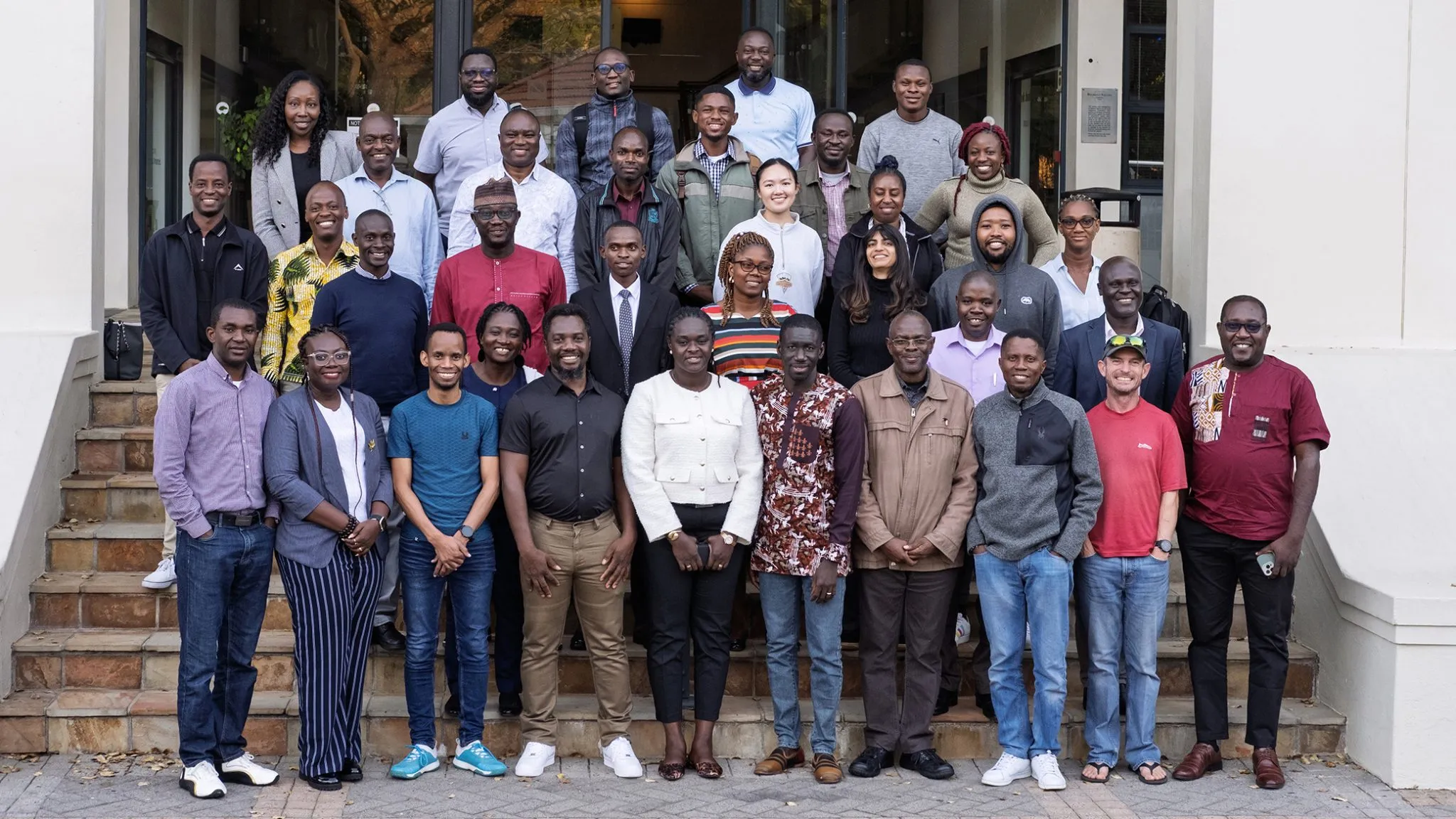
Momentum strengthened at a Rockefeller Bellagio convening in 2023, where participants discussed why and how the Global South should provide leadership in climate intervention research, birthing the idea of the research hub. A Rockefeller Small Grant in 2024 then enabled the formalisation of the hub, the development of a Theory of Change, the preparation of information and financial briefs, and the creation of a prototype website. The Navigation Fund then provided funding in 2025 to build on and establish this work, culminating with the launch of the African Climate Intervention Research Hub at the Degrees Global Forum in Cape Town in May 2025, as well as several engagements with African stakeholder communities to discuss climate intervention
The Quadrature Climate Foundation will fund the growth and expansion of the ACIRH from 2026 in our mission to build a diverse community of African experts representing African interests in the global climate intervention discourse.
We adopt a risk–risk framing in our research, which asks: how do the risks of climate change compare with the risks of climate change combined with a climate intervention? This approach keeps core climate science at the centre where we can conduct urgent research that we need to do anyway on the impacts of climate change in Africa on rainfall, agriculture, water, health, and energy; then examine whether an intervention could improve or worsen conditions in African regions.
Some argue a strict precautionary principle should apply to SRM meaning SRM research should not be done at all. However, for African researchers, that would reinforce the status quo, where the limited climate change research on Africa is still produced mainly by institutions in the Global North. The risk–risk framing, together with dedicated funding, creates space for African scientists to conduct the climate research Africa urgently requires to better understand our risks from climate change, and then to evaluate whether climate interventions could amplify or reduce those risks.
This is the foundation of the African Climate Intervention Research Hub (ACIRH), a coordinated, African-led community that connects researchers, strengthens capacity, and produces evidence that reflects Africa’s priorities. Our goal is to ensure that any future decisions about climate interventions are informed by African science, African experience and African leadership.