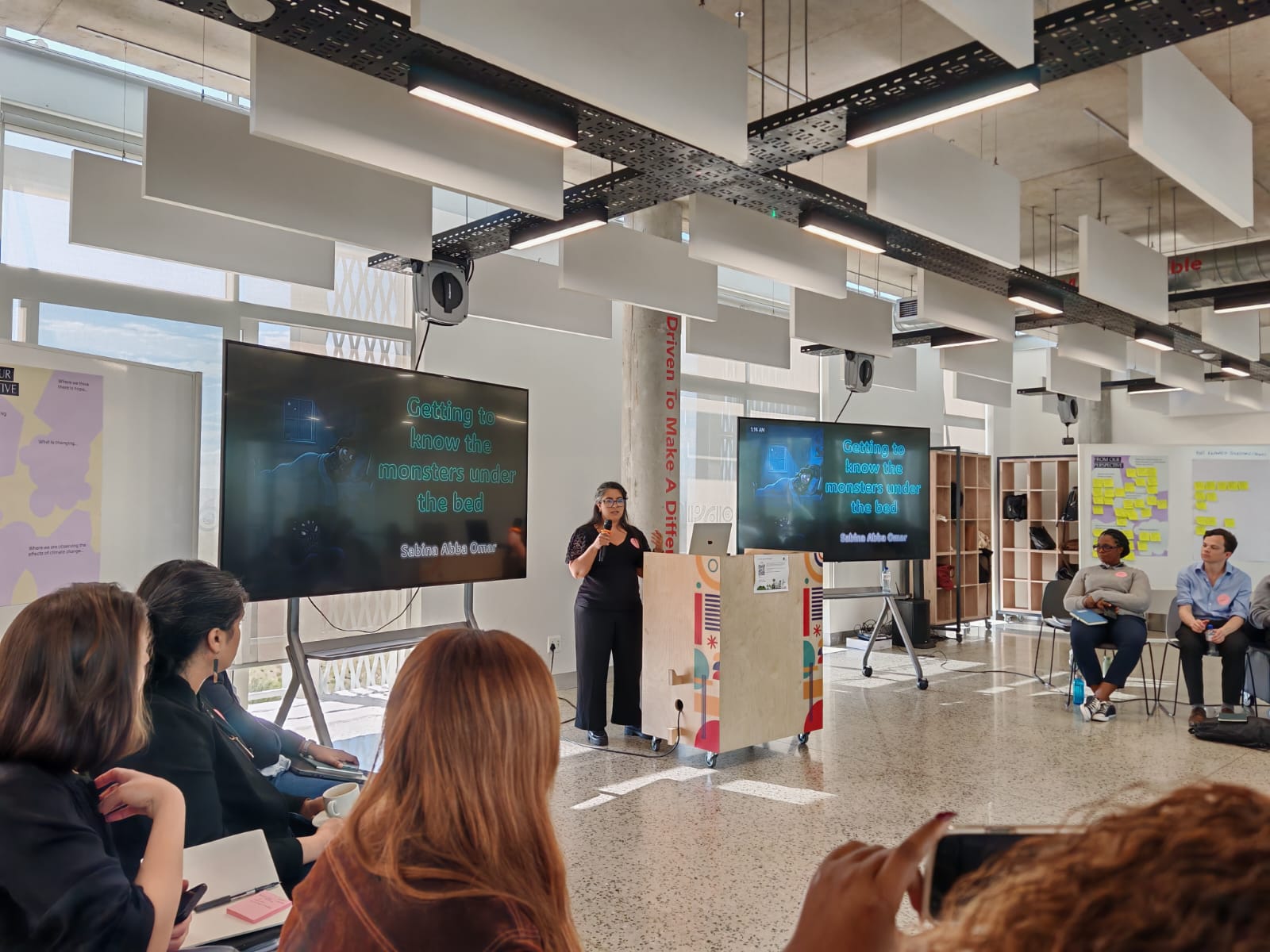
ACIRH fellow Dr Sabina Abba Omar’s Research on Southern African Climate Dynamics
By Wonder & Co.
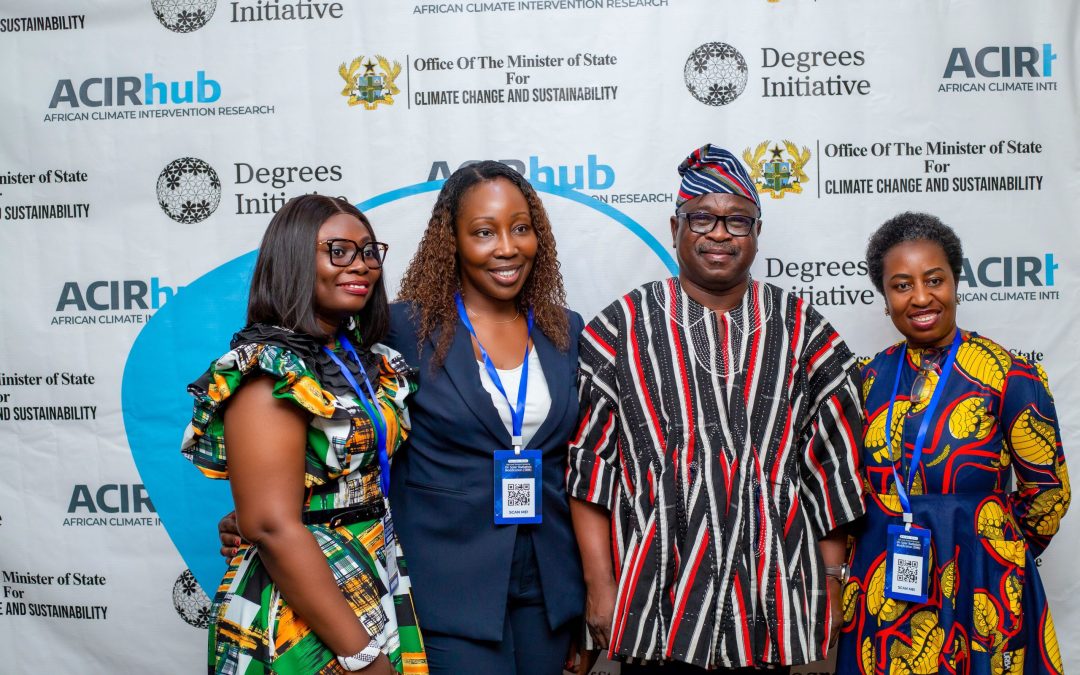
We recently caught up with African Climate Intervention Research Hub (ACIRH) fellow Dr Sabina Abba Omar to learn more about her journey in climate research. Sabina’s path was shaped early on, her mother inspired her love of nature through birdwatching, while her stepfather, a mathematics teacher, sparked her interest in numbers. Influenced by the activism of both her mother and father, she also developed a deep sense of social responsibility. Today, she hopes to incorporate the intersection of these three worlds into her work, blending scientific rigour with environmental justice.
Sabina completed her PhD in Environmental and Geographical Science at the University of Cape Town, where her research focused on cut-off lows, the major weather systems responsible for heavy rainfall in South Africa’s Western Cape. After her PhD, she took up a postdoctoral position at the Abdus Salam International Centre for Theoretical Physics in Trieste, Italy, analysing regional climate model data from the CORDEX Africa initiative and assessing how well those models represent aspects of the Southern African climate system.
She now holds the position of Research Officer in the Climate System Analysis Group (CSAG) at the University of Cape Town, where her current work examines urban heat stress in a warming climate and what that means for cities in Southern Africa. Sabina hopes that her research, together with the work of others, can support better urban planning, strengthen public health preparedness, and raise awareness that cities need to identify the residents most exposed to urban heat stress.
While local urban adaptation is critical, Sabina’s broader research also spans high-resolution regional climate model simulations, the impacts of Solar Radiation Modification (SRM), and Southern African precipitation dynamics. On the global topic of SRM, Sabina stresses the vital importance of viewing the issue from the continent’s own perspective. This dedication to driving local ownership shapes her work with the hub; for Sabina, the ACIRH is fundamentally about building scientific capacity and creating the opportunities African researchers need to strengthen research on the continent and contribute African perspectives to global discussions.
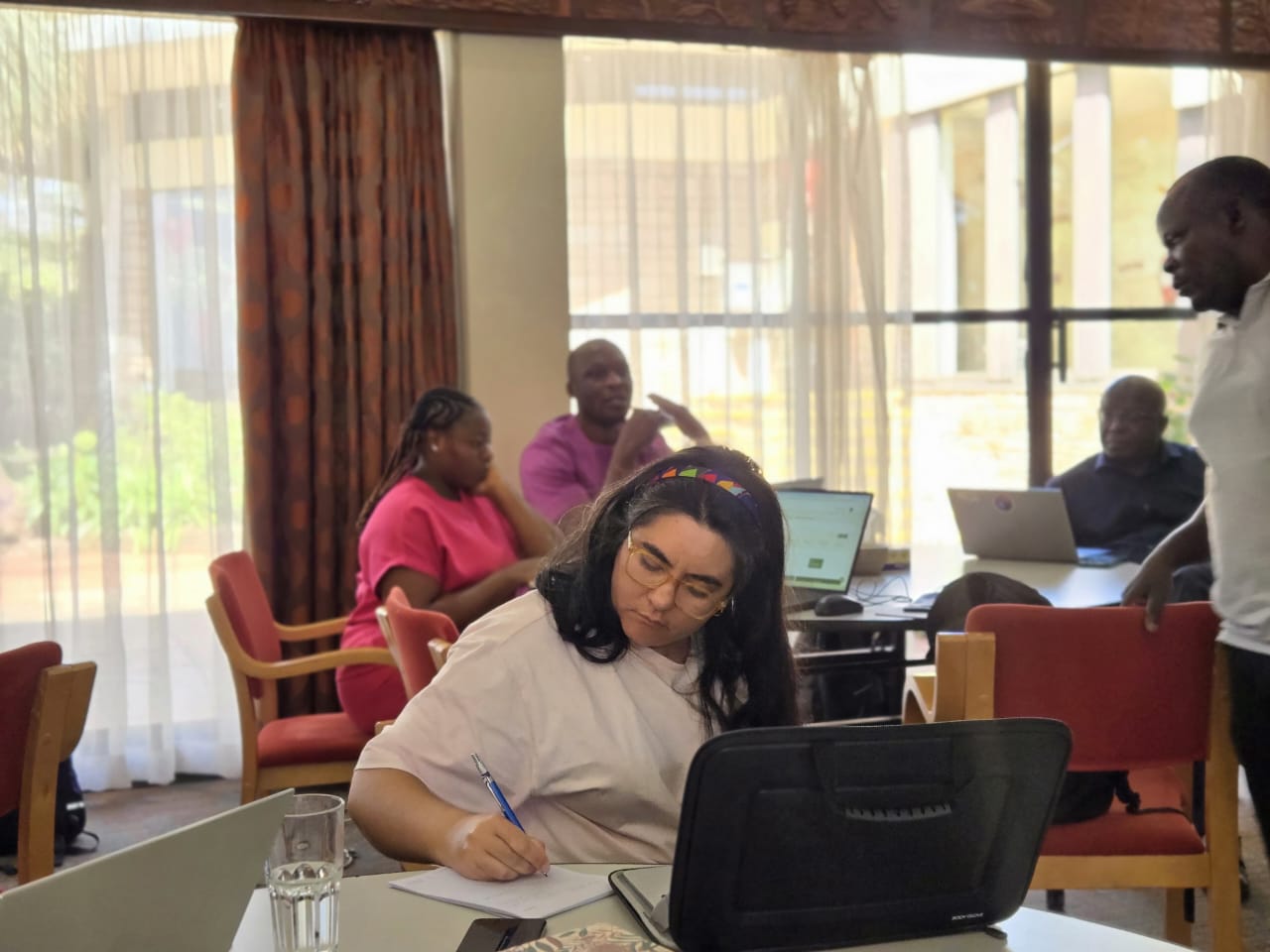
You’ve worked across South Africa, Italy, and back again, building a career around understanding the skies above Southern Africa. Was there a particular moment or person that drew you to studying weather and climate in the first place?
My childhood had a big role to play, I was encouraged to observe and have a connection with nature by my mother who was an avid bird watcher – together we would sit and draw birds. She taught me to appreciate the beauty in nature. My parents were both activists at some point in their lives and so social responsibility was emphasised throughout my upbringing. My step dad was a maths teacher and I developed a love for maths. Climate science was a combination of all of these things coming together: art and beauty, activism and maths and science. When I did a course in undergrad in climate science it just felt right. The lecturer was incredibly inspiring and later became my postgrad supervisor. I found the concepts and explanations of how the climate worked just so beautiful, I wanted to do a small part in speaking out against the injustice of climate change and I could incorporate my enjoyment of maths and problem solving.
Much of your research looks at “cut-off lows”, which bring both damaging floods and life-saving rain to South Africa. Can you explain what these are, and why they matter so much to people living in the Western Cape?
Cut-off lows are types of weather events which impact regions near to the mid-latitudes. Over the mid-latitudes we have this region of air which is dominated by westerly winds. In the upper atmosphere these westerly winds move around the hemisphere but deviations can occur resulting inmeanders in these paths. If these meanders are big enough the air can become cut-off away from the westerlies and move over warmer air. This temperature difference causes instability and leads to rising air and if the air is moist enough can lead to intense rainfall. Because a cut-off low is cut-off from these westerly winds it means it can stick around for longer which adds to the intense rainfall it can bring.
You spend a lot of time testing whether climate models actually capture what’s happening on the ground in Southern Africa. Why is this so important for guiding real-world decisions?
Climate models are tools that help us better understand how the climate works and how it could change in the future. Because climate models are mathematical representations of the earth climate system, scientists can test different scenarios – such as increasing greenhouse gas emissions – and see how they might impact future climate. To make these projections useful for Africa, it is important that models accurately represent the processes that impact the continents climate. Knowing the strengths and limitations of these models allows us to understand to what extent we can infer information from these scenarios for African policy and decision making.
Your current work touches on urban heat stress in a warming climate. What does that look like for cities in Southern Africa, and what should residents and city planners be paying closer attention to?
What we see is that, even within the same city, some neighbourhoods experience much higher levels of heat than others. Unfortunately, these hotter areas often overlap with communities that are already more vulnerable.
Research and lived experience show that two neighbourhoods can have the same air temperature but very different realities. An area is far more liveable during extreme heat if it has access to shade, trees and green spaces, lower building density, buildings that stay cooler through good design and ventilation, and reliable access to healthcare and public transport. These factors all influence how people experience heat and how well they can cope with it.
Extreme heat affects people’s health and can make working conditions dangerous. Yet for many people, avoiding the heat simply isn’t an option. For example, imagine having to choose between going to work, earning enough money to put food on the table, and protecting your health from dangerous heat. That is an impossible choice, yet it is a reality for many people across Southern Africa. These are survival trade-offs that climate change is making more common.
We are still learning more about how prolonged and repeated heat exposure affects people and communities. My current work focuses on creating high-resolution heat maps of Johannesburg to identify neighbourhoods that are exposed to high heat conditions.
Ultimately, I hope this research, together with the work of many others, can help support better urban planning, strengthen public health preparedness, and raise awareness that the way our cities are designed can either reduce or reinforce existing inequalities. Rising housing costs experienced in many South African cities continue to push many people into areas that are more exposed to environmental risks, including extreme heat. As our cities grow, we have a responsibility to ensure that everyone has access to neighbourhoods that are safe, healthy, and resilient in a warming climate. We cannot continue to prioritise economic growth alone if it comes at the expense of people’s health, safety, and quality of life.
You are part of a growing community of African scientists at the African Climate Intervention Research Hub (ACIRH) examining ideas like solar geoengineering from the continent’s own perspective. Why is it important that these conversations are happening in and from Africa, rather than only elsewhere?
I think that it is essential to have many voices in these conversations. Solar geo-engineering is a controversial topic and inclusion needs to be a priority. I think in the past decisions of these importance have been made by a small number of ‘powerful’ countries who have dictated what the world should do. Many of the countries or people who are most affected are left with little or no influence over the outcomes. Having more research and dialogues about solar geo-engineering in Africa is important because it enables African researchers, policy makers and communities to contribute to these perspectives. This helps ensure that any future decisions are informed by a range of experiences and priorities, and that African countries have agency in shaping choices that could affect them.
Do you have any message for African researchers in climate intervention research?
African researchers need to embrace collaboration, as this multi-faceted topic demands diverse perspectives from different fields. Ultimately, these decisions must serve the public good, a priority that must be deeply embedded within the research itself.